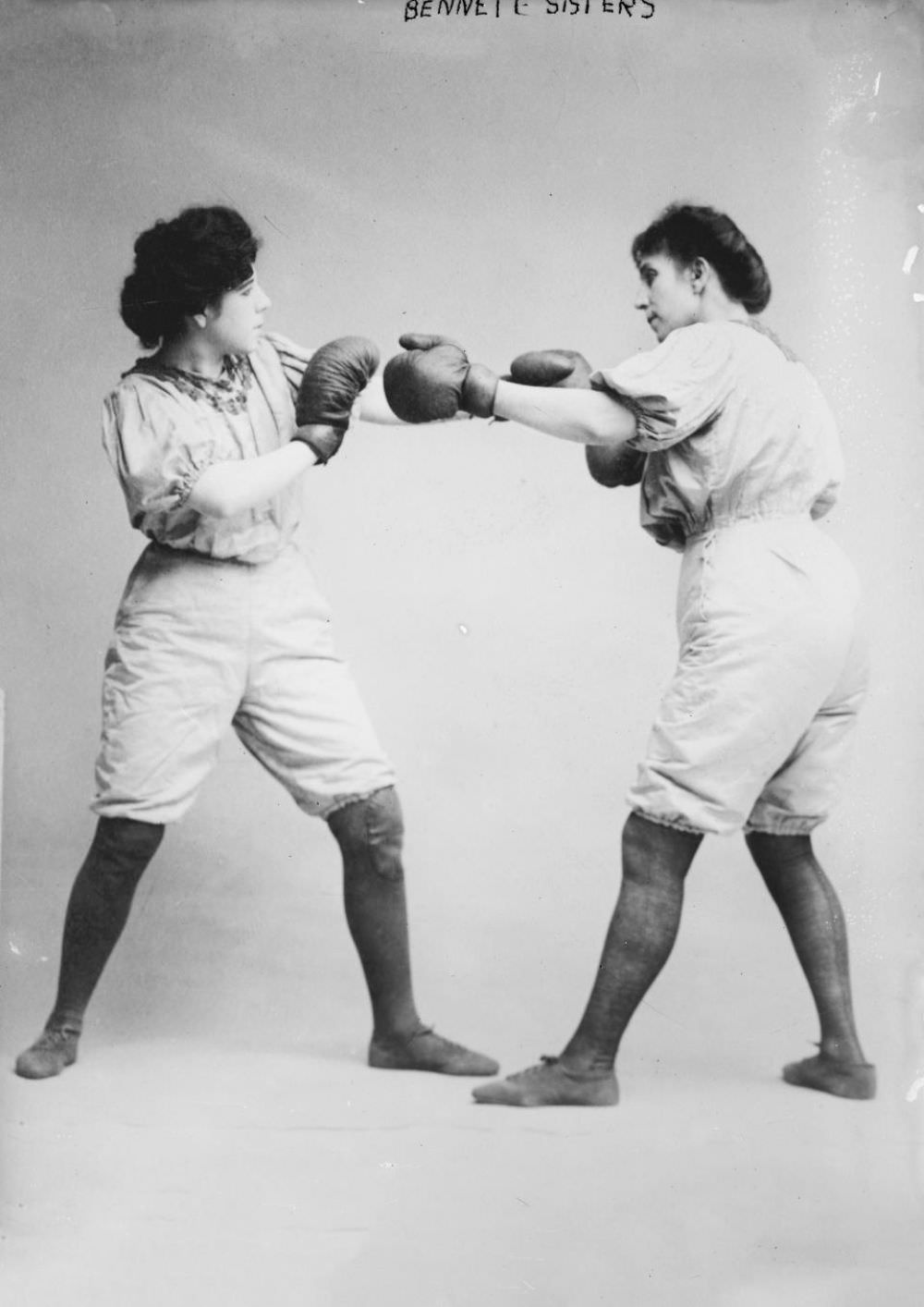
Gloved hands meet at arm’s length as the Bennett Sisters square off in a practiced stance, their attention fixed and their footing wide for balance. The plain studio backdrop pulls the eye to the essentials—boxing gloves, sturdy shoes, and bloomers that signal movement and intent rather than parlor decorum. Above them, the simple caption “BENNETT SISTERS” reads like a marquee, reminding viewers that this was not only sport, but an act built for an audience.
Vaudeville in the United States thrived on novelty and skill, and female fighters drew crowds precisely because they challenged expectations while delivering real athletic ability. Between 1910 and 1915, women’s physical culture was gaining visibility, yet public bouts still carried an edge of controversy, making such performances both entertainment and quiet defiance. The sisters’ mirrored posture hints at choreography and timing—an onstage contest shaped to thrill without losing credibility.
For readers searching early women’s boxing history, vintage prizefighting photography, or vaudeville-era performers, this portrait offers a crisp window into the period’s mix of show business and strength. It also widens the story of American sport beyond sanctioned rings and famous champions, toward the touring circuits where many athletes earned their living. Seen today, the Bennett Sisters stand as early reminders that women’s combat sports have deeper roots than most histories admit.