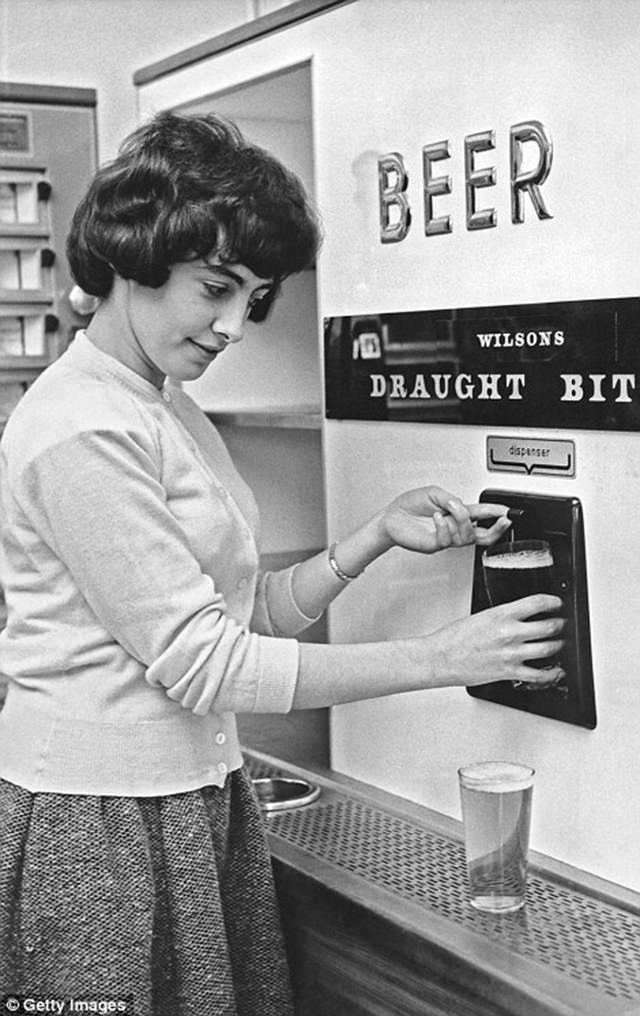
A neat, everyday moment of mid-century modern life unfolds as a young woman operates a sleek self-serve drinks machine, her hand poised at the dispenser while a glass waits beneath. Big, bold lettering on the unit and the tidy counter setup evoke the era’s confidence in push-button convenience, when automated service was becoming part of offices, canteens, and public spaces. Even without the bustle of a crowd, the scene suggests the simple novelty of getting a drink with minimal human interaction.
The post title’s detail about paying by credit card points to a quieter revolution: cashless transactions beginning to seep into ordinary routines. In the 1960s, credit cards were still a sign of modernity, and pairing them with a vending-style dispenser made the future feel close at hand—fast, efficient, and a little bit glamorous. The woman’s calm focus, the controlled pour, and the “self-serve” logic of the machine together tell a story about how technology reshaped small pleasures and daily habits.
For readers interested in inventions and consumer history, this image works as a snapshot of changing expectations—what people wanted from public refreshments, and what designers promised through automation. It also makes a great SEO-friendly touchstone for themes like 1960s technology, early cashless payment, vending machines, and the evolution of credit card use in everyday life. Behind the straightforward act of filling a glass lies a broader shift toward the frictionless, self-service world we now take for granted.