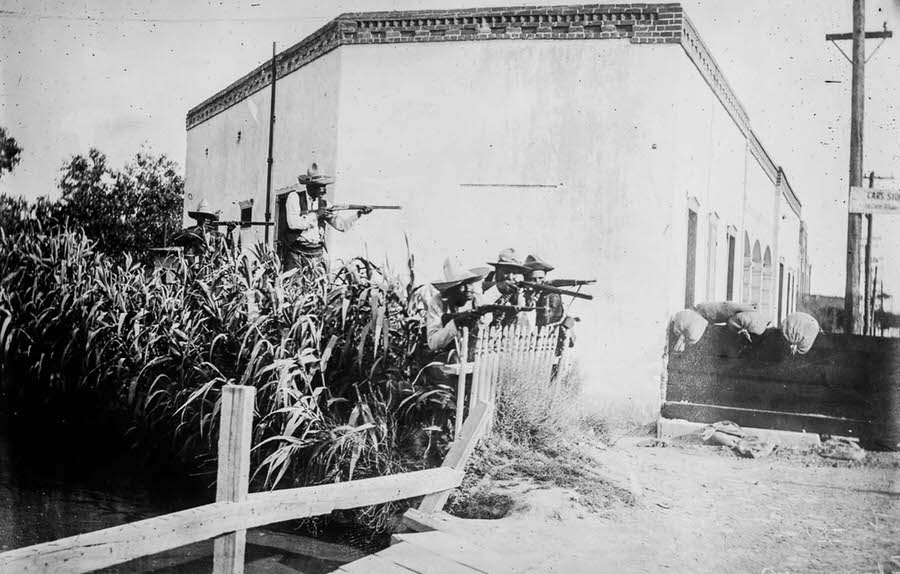
Along the edge of a narrow irrigation ditch, a cluster of rebels crouches and leans into their rifles, using the watercourse and its tall reeds as ready-made cover. The men are packed tightly near a simple fence line, hats pulled low as they sight down their barrels, turning an everyday agricultural feature into a defensive position. The composition makes the moment feel tense and improvised, as if the next exchange of fire could break at any second.
To the right, a stark stucco building with a plain façade anchors the scene, its clean walls contrasting with the rough, hurried posture of the fighters. A low barricade—built up with what appears to be sacks or bundled material—adds another layer of street-level fortification, suggesting an urban edge where commerce and conflict collide. Telegraph or utility poles recede into the background, hinting at modern infrastructure running through a landscape suddenly shaped by civil war.
What lingers most is how ordinary spaces are repurposed when stability collapses: a ditch becomes a trench, a fence becomes a firing rest, and a corner of town becomes a battlefield. For readers interested in Civil Wars photography, insurgent tactics, and the material culture of fighting, the photo offers a vivid study in cover, concealment, and the grim pragmatism of street combat. It’s a reminder that rebellion often unfolds not on grand parade grounds, but in the margins—beside irrigation water and under the blank wall of a common building.