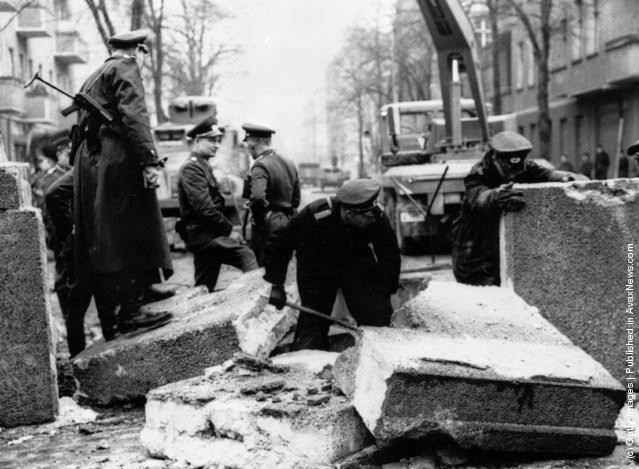
Jagged slabs of concrete lie scattered across a Berlin street as uniformed officers pick their way through the rubble, measuring and prodding at the broken edge of the Wall. Rifles slung over shoulders and heavy coats buttoned against the cold, they work in a tense half-circle—part investigation, part warning—while the gap in the barrier speaks louder than any official statement. The damage is fresh enough to feel like a wound, with debris piled where a vehicle has forced a brutal passage.
In the background, urban apartments and bare winter trees frame the scene, reminding viewers that this border ran through ordinary neighborhoods and daily routines. A crane and repair equipment wait nearby, signaling how quickly authorities intended to erase evidence of vulnerability and restore control. The photograph’s grain and hurried composition add to the sense of urgency, as if the moment could tip from cleanup to confrontation at any second.
Set in 1963, the title anchors this episode in the hardening years of the Cold War, when the Berlin Wall stood as a physical line between East Germany and the West. The account of an East German ramming the Wall with an army car and escaping turns the broken concrete into more than construction material—it becomes proof of risk, desperation, and ingenuity under surveillance. For readers searching Berlin Wall history, East Germany escape attempts, and Cold War border security, this image offers a stark, street-level view of a divide that was constantly tested and constantly repaired.