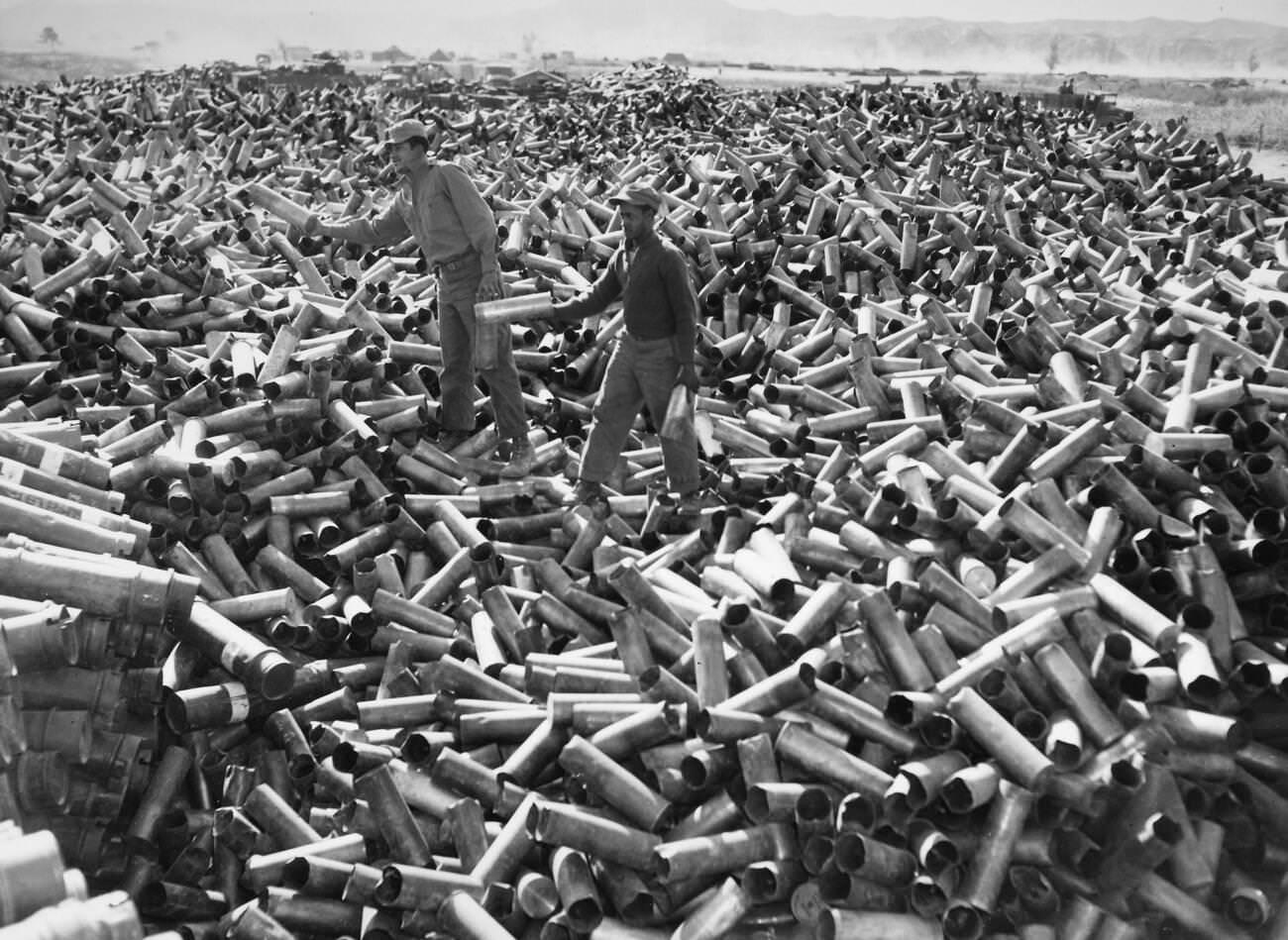
A sea of brass stretches across the frame, shell casings piled so high they seem to ripple like waves under the open sky. Two uniformed men pick their way across the heap, dwarfed by the sheer volume of spent artillery cases gathered at a U.S. Army salvage yard in Korea in 1952. In the far distance, low hills and scattered structures hint at a landscape still shaped by the demands of war.
Salvage rarely makes it into popular retellings of the Korean War, yet images like this reveal the vast logistical machinery behind every barrage. Each casing represents a fired round, but also a valuable resource—metal that could be collected, sorted, and routed back into supply chains rather than left to rust in fields or roadsides. The careful work suggested here is less about spectacle than about the daily discipline of recovery and reuse.
For historians and collectors of military history photography, the scene is a stark ledger written in brass: consumption measured not in headlines, but in tonnage and labor. The salvage yard becomes a quiet afterimage of combat, where the violent moment has passed and what remains is inventory—evidence of industrial warfare and the systems built to sustain it. As a WordPress post feature, this photograph invites readers to consider the overlooked end of the ammunition story: what happens after the guns fall silent, and the casings come home in piles.