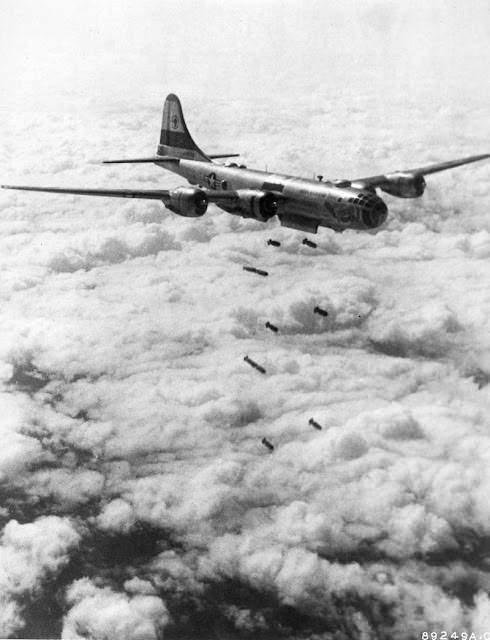
High above a thick blanket of clouds, a B-29 Superfortress cruises with its bomb bay doors open, releasing a staggered string of ordnance that falls toward an unseen target. The aircraft’s long wings, clustered engines, and glazed nose define the heavy-bomber silhouette that dominated strategic air power in the mid‑20th century. Even without ground details, the view conveys the cold geometry of high-altitude bombing—precision by instruments, destruction by weight, and distance measured in thousands of feet.
In the 1950s, the Korean War turned the skies into a brutal proving ground where piston-driven bombers met determined air defenses, including the Korean People’s Air Force (KPAF) and expanding anti-aircraft networks. The post title’s claim that the KPAF shot down around 16 B‑29s points to how dangerous these missions could become once opponents learned to counter massed formations and predictable routes. Behind every statistic was a crew of specialists—pilot, navigator, gunners—working under pressure as flak bursts and fighter threats transformed a routine-looking run into a fight for survival.
War photography like this does more than document hardware; it captures a moment when technology, doctrine, and human endurance collided above the cloud tops. For readers searching Korean War aviation history, B‑29 Superfortress missions, or KPAF aerial combat claims, the image offers a stark visual entry point into that contested air campaign. It invites reflection on the bomber’s long arc from World War II fame to its hazardous reappearance in Korea, where the promise of altitude and speed met the reality of an enemy adapting fast.