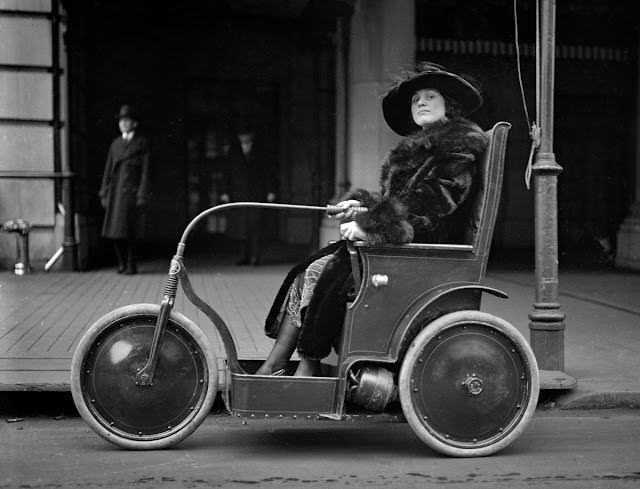
Elegance meets experimentation in this striking scene of the Custer Chair Car, a compact personal vehicle that looks part armchair, part automobile. A well-dressed driver sits high and comfortably, hands on simple controls, while oversized wheels and a low, open frame suggest a machine designed for city streets and short trips. The mix of plush seating and pared-down engineering hints at an era when inventors were still negotiating what “modern transportation” should feel like.
Roaring ’20s optimism lives in details like these: the promise that mobility could be safer, easier, and even stylish for everyday people. The Chair Car’s design reads like a response to crowded sidewalks and busy roads, favoring visibility and simplicity over speed, and turning the act of driving into something closer to lounging. In that sense, it becomes more than a curiosity—it’s a snapshot of consumer desires and the inventive spirit that kept pushing beyond conventional cars.
For readers exploring 1920s inventions and early automotive history, this historical photo offers a memorable entry point into the era’s restless creativity. The Custer Chair Car stands as a “what if?” made real, reflecting the period’s faith that clever design could reshape daily life. Whether viewed as a practical commuter experiment or a bold detour in vehicle evolution, it remains a beacon of hope from a decade that believed the future was just a new mechanism away.