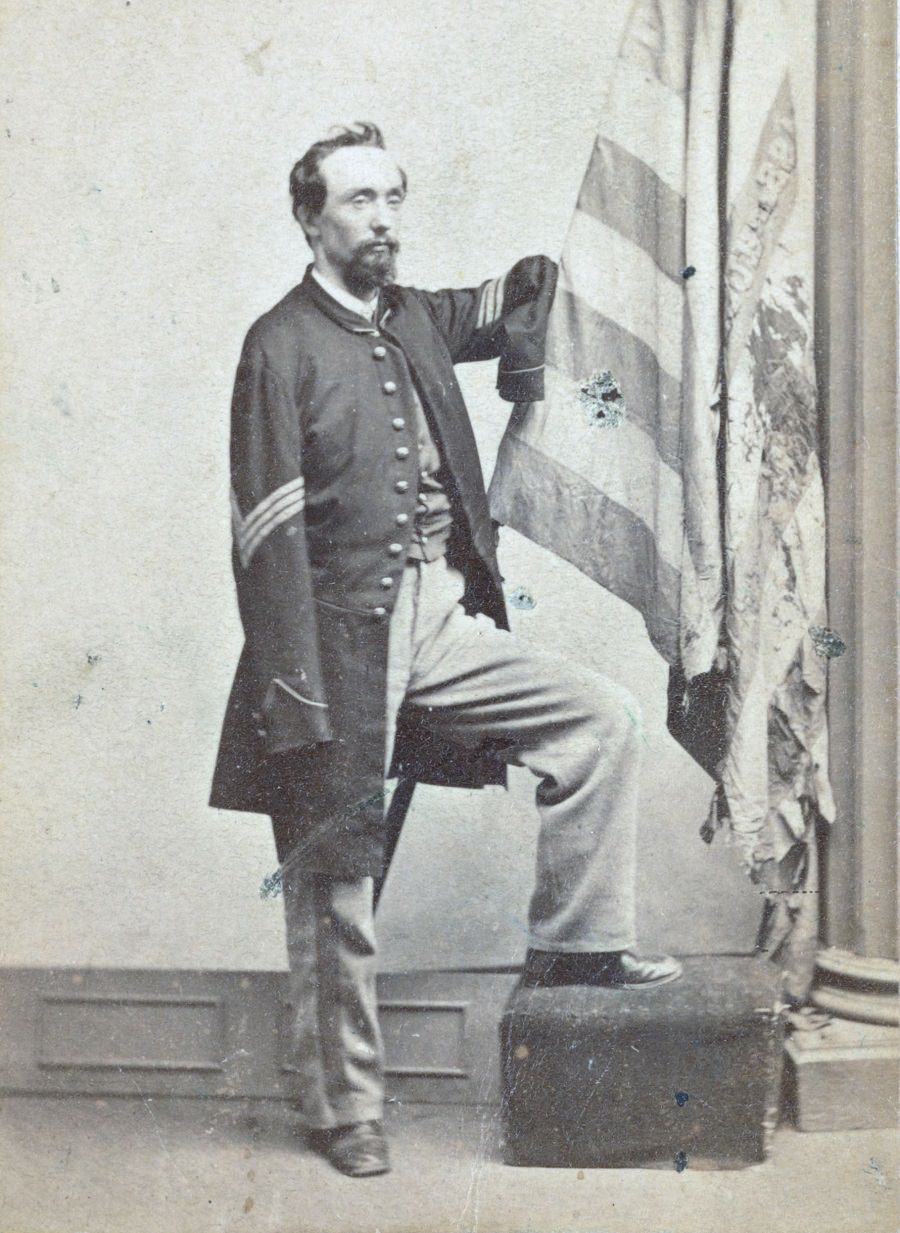
Private Vernon Mosher stands in a studio pose that balances pride and fatigue, one boot braced on a photographer’s block as if to steady himself for the long exposure. His uniform coat, neatly buttoned, draws the eye to the sleeve where the loss of a hand is made unmistakably visible, a stark reminder of what Civil War service could cost a soldier long after the fighting ended. Behind him hangs a large flag with bold stripes, its fabric worn and marked, adding a ceremonial weight to the scene.
The title places him with Company F of the 97th New York Infantry Regiment, and the portrait reads like a veteran’s statement: I served, I endured, I returned. Details of dress and posture suggest the careful choices many former soldiers made when sitting for postwar photographs, using uniforms, flags, and battlefield scars to communicate identity without a word. The amputated hand is not hidden; it is presented as part of the record, making this image as much about survival as it is about military affiliation.
For readers interested in Civil War history, Union infantry regiments, and the lived aftermath of combat, this photograph offers a focused glimpse into the veteran experience in the years following the war. It also speaks to the period’s visual culture—studio backdrops, symbolic props, and the quiet authority of a man who has seen organized violence up close. As an archival-style portrait, it invites questions about Mosher’s service, his injury, and how communities remembered soldiers whose bodies carried the war into peacetime.