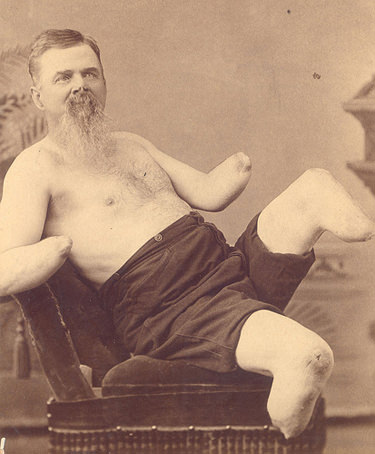
Reclining in a studio chair with his torso bare and a trimmed beard framing a steady, almost mischievous expression, this wounded veteran meets the camera with a bold self-possession. Both arms and both legs have been amputated high on the limbs, yet he is posed as if he’s simply taking a moment of rest—one stump lifted, the other angled forward—turning a life-altering injury into a startlingly direct portrait. The plain backdrop and careful lighting place the emphasis where the photographer wanted it: on endurance, on dignity, and on a face that refuses to be reduced to tragedy.
Civil War-era photography often straddled the line between documentation and spectacle, and images like this were part of a broader visual record of battlefield survival. The man’s cheeky, unbowed gaze complicates the usual narrative of loss, hinting at personality and humor even in the aftermath of extreme trauma. For modern readers searching for Civil War amputee photographs, wartime injuries, or historical portraits of veterans, this kind of studio image provides a rare, intimate encounter with the human consequences of conflict.
What lingers most is the tension between vulnerability and defiance: the body bears the unmistakable marks of combat medicine, while the pose feels almost casual, as if he’s daring viewers to look away. Without needing names or exact places, the photograph still speaks clearly about resilience and the ways survivors shaped their own representation in front of the lens. It’s a reminder that history isn’t only found in battles and headlines, but also in the quiet, deliberate decision to face the camera—cheekily, bravely, and on one’s own terms.