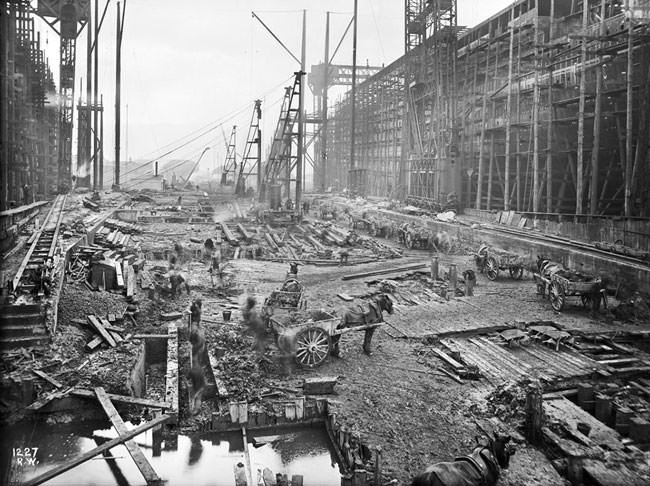
Steel frameworks rise like a man-made canyon in this bustling shipyard scene, where mud, timber offcuts, and scattered tools hint at the relentless pace of early twentieth-century industry. Workers appear small against the towering ribs and scaffolding, while heavy wagons and horses move materials through the cluttered ground. It’s the kind of raw, half-finished landscape that makes “unsinkable” feel less like a boast and more like a promise forged through labor.
Behind the romance of ocean travel sits a world of practical inventions: standardized metal components, precise riveting, and the logistics required to coordinate thousands of parts into a single hull. The skeletal structure visible here suggests the careful choreography of cranes, gantries, and measuring lines that turned design drawings into a leviathan of steel. Even before any grand launch, the ship’s rise to fame began in places like this—where engineering, supply chains, and skilled hands intersected.
For readers searching the story of the Titanic’s construction, this photograph offers a grounded reminder that legends are built long before they sail. The scene invites a closer look at how large passenger ships were assembled, what tools and transport were relied upon on the yard floor, and how industrial ambition reshaped coastal skylines. In telling the Titanic’s ascent through its working environment, the image brings the era’s innovations into focus—less myth, more mechanics, and all the more fascinating for it.