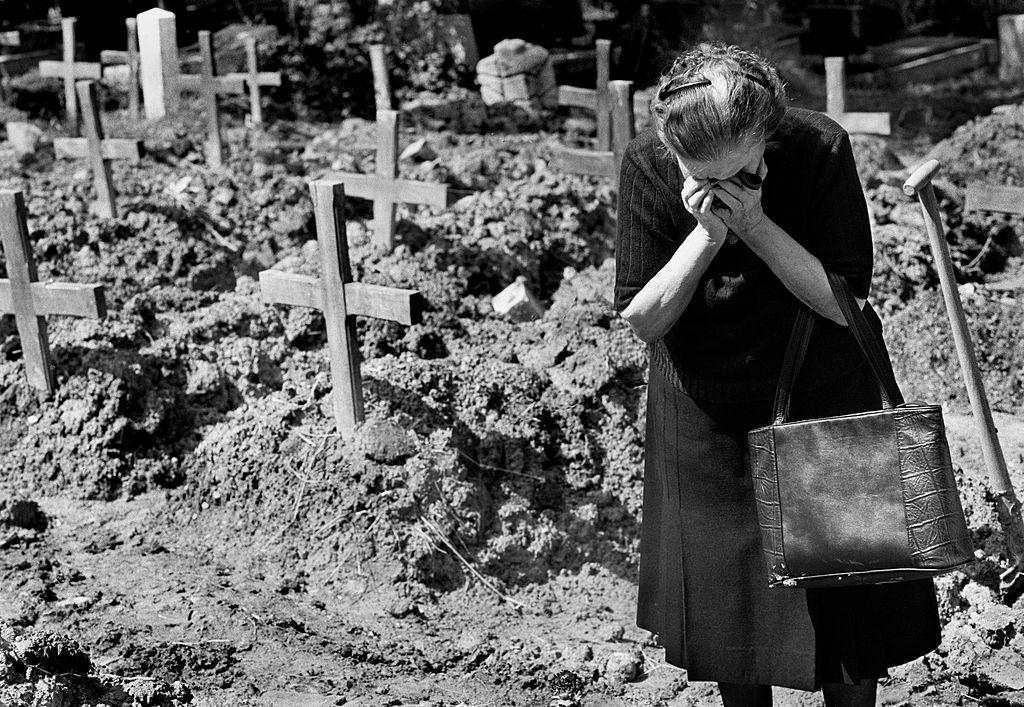
Grief stands at the foreground of Lion Cemetery, where a woman bends inward, her face hidden in her hands as if the weight of loss cannot be carried in public. Around her, rough earth and simple wooden crosses stretch across the frame, marking fresh graves in uneven rows. The stark contrast of the photograph draws the eye from her dark clothing and handbag to the pale markers behind, turning an ordinary cemetery scene into a quiet record of civilian mourning.
Lion Cemetery in Sarajevo is remembered as a place where citizens were buried, and the title’s plain wording underscores the human cost that civil wars leave behind. No banners, uniforms, or battlefield drama appear here—only the aftermath, measured in disturbed soil and hastily placed crosses. The woman’s posture makes the story intimate: a private collapse in a public space, suggesting countless similar moments beyond the camera’s edge.
For readers searching for Sarajevo history, wartime photography, or images of civilian casualties and remembrance, this photograph offers a poignant entry point. It speaks to how communities memorialize the dead when violence reaches neighborhoods and families, not only front lines. As an artifact of conflict and mourning, it invites reflection on what cemeteries preserve: names and dates when available, but also the raw, wordless rituals of those left behind.