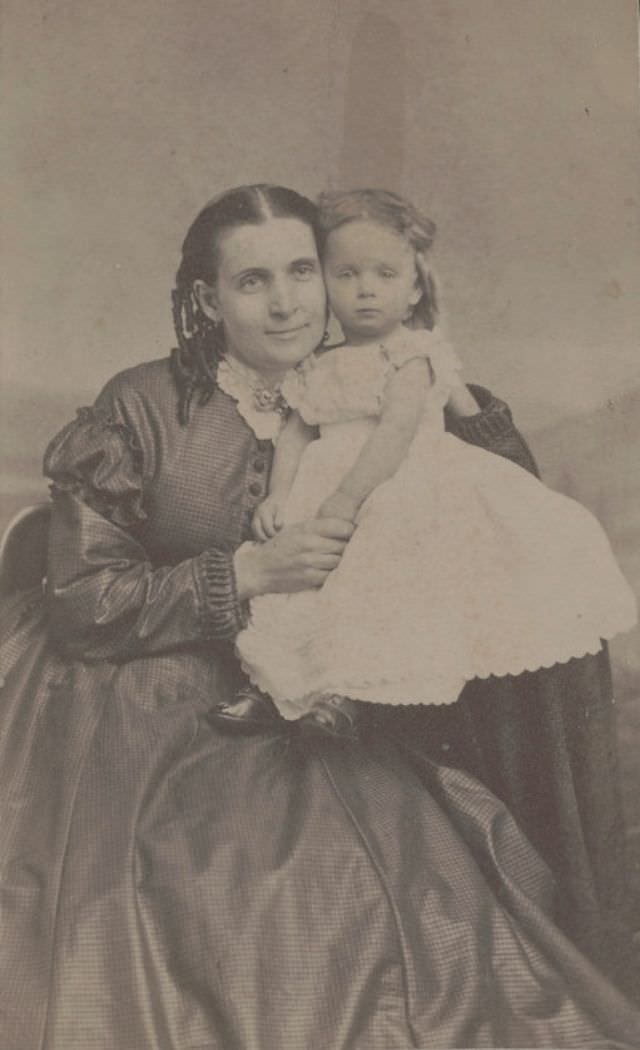
Otelia Butler Mahone sits for the camera with a young child gathered securely in her arms, the pair posed in the intimate, carefully arranged style so common to mid-19th-century portrait photography. Her dark dress, neatly set hair, and composed expression convey a quiet steadiness, while the child’s light gown and direct gaze lend the scene a tender immediacy. Even without a detailed backdrop, the studio setting keeps attention fixed on the closeness between mother and child.
Known from the title as a Civil War nurse who worked in hospitals in Richmond, Virginia, Otelia’s presence invites readers to consider the often-overlooked labor of women on the home front. Wartime nursing demanded endurance, practical skill, and emotional resilience, especially in crowded hospital wards where suffering and uncertainty were constant companions. This portrait, by contrast, offers a private counterpoint to those public responsibilities—an image of care that echoes the caregiving roles women carried in both family and medical spaces during the Civil War era.
Remembered also as the wife of Confederate Major General William Mahone, she appears here not as an adjunct to military rank but as a figure with her own story, framed through domestic life and maternal identity. The child is identified in the title as probably a daughter named Otelia, underscoring how family names and legacies were woven into the period’s personal histories. For anyone exploring Civil War nursing, Richmond wartime hospitals, or Victorian-era family portraiture, this photograph provides a compelling, human-scale glimpse into a world shaped by conflict and kinship.