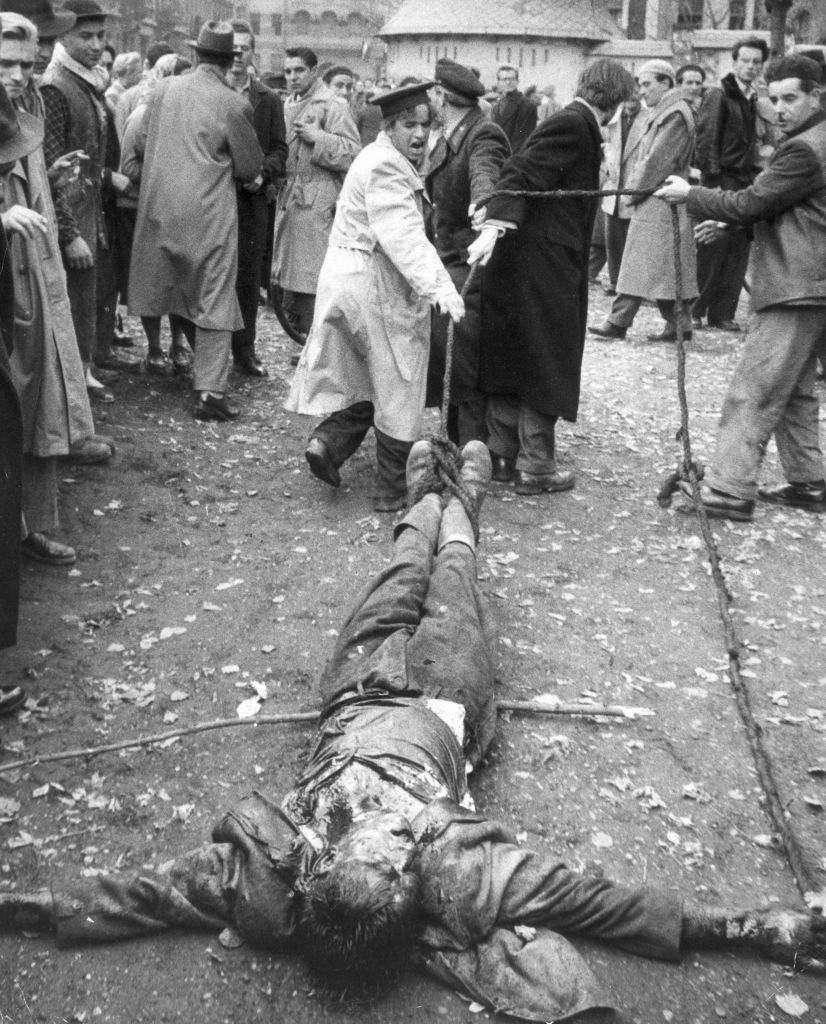
Ropes bite into a man’s ankles as his body is hauled across a littered street, arms flung wide and clothing torn, while a tight ring of onlookers and pursuers surges around him. Several men in heavy coats and caps pull and gesture, their faces set with anger and adrenaline, and the ground underfoot is scattered with leaves and debris that suggest a public square or thoroughfare thrown into turmoil. The title identifies the victim as a beaten Hungarian colonel associated with the ÁVO, the feared secret police of the communist regime, and the scene reads as a moment when authority collapses and the crowd takes control.
Around the dragging figure, the crowd’s posture tells its own story: some lean in, others hang back, all caught in the uneasy choreography of collective violence. There is no neat line between participant and witness here—only shifting bodies, clenched hands, and a sense that the rules of everyday life have been suspended. It’s a stark glimpse into civil conflict, where uniforms and titles can become liabilities, and where retribution is carried out in full view of neighbors and strangers alike.
For readers searching for Hungarian history, communist-era repression, secret police brutality, and the dynamics of uprising, this photograph offers a grim, immediate primary source. The ÁVO’s reputation for surveillance and coercion helps explain why rage could boil over into public humiliation and punishment when protests erupted. As a historical image, it doesn’t ask to be admired; it demands to be confronted, reminding us how quickly political struggle can spill into the street and how vengeance can masquerade as justice in the chaos of revolution.