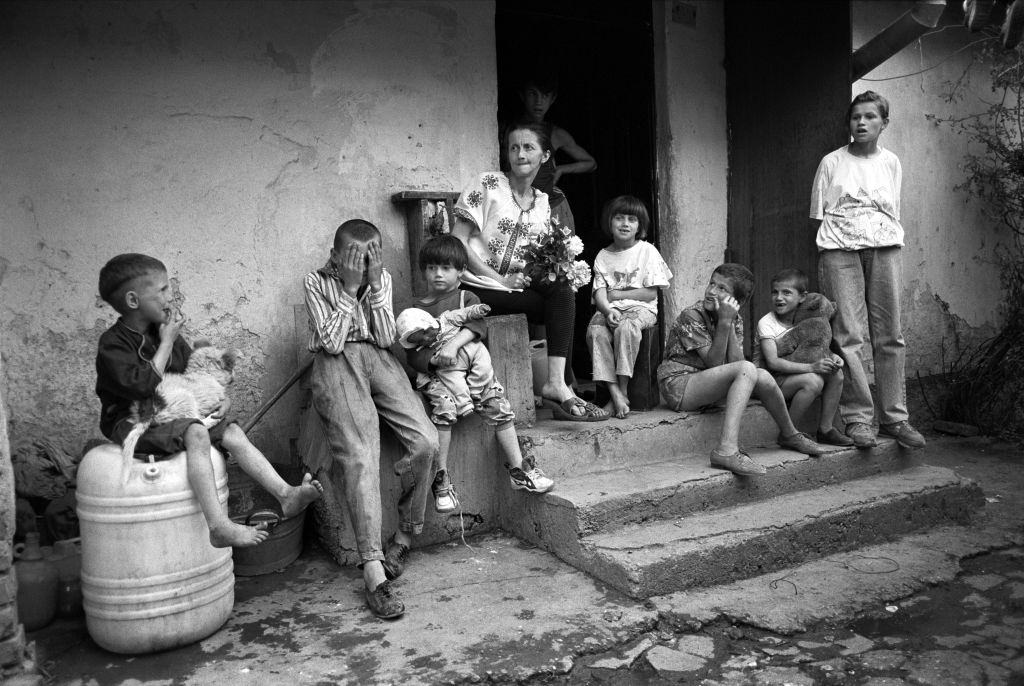
Against a rough, cracked exterior wall, a mother sits at the threshold of her home with eight of her ten children, a quiet family portrait shaped by hardship. The worn steps, bare doorway, and improvised seating turn the entryway into both living room and lookout, while a simple bouquet in her hands adds a striking note of care amid scarcity. Children cluster in different poses—some leaning, some perched, one standing apart—each expression hinting at a different way of meeting the camera and the moment.
Small details deepen the story without needing captions: tired shoes on concrete, thin clothing, a large plastic container nearby, and the practical clutter of daily survival. A child hides his face, another grips a soft toy, others stare straight ahead as if accustomed to uncertainty, and one figure lingers in shadow behind the mother. In the context suggested by the post’s “Civil Wars” note, the scene reads as more than poverty alone, echoing displacement, disrupted work, and the strain that conflict presses onto ordinary households.
May 1994 sits near the end of a turbulent decade in many parts of the world, and photographs like this help anchor that history in human scale. Rather than battlefields or political leaders, the frame holds the domestic front line: parenting under pressure, siblings sharing space, and a home that offers shelter even when it cannot offer ease. For readers searching for historical family photos, civilian life in wartime, or the social impact of civil conflict, this image delivers a direct, unforgettable record of resilience and vulnerability side by side.