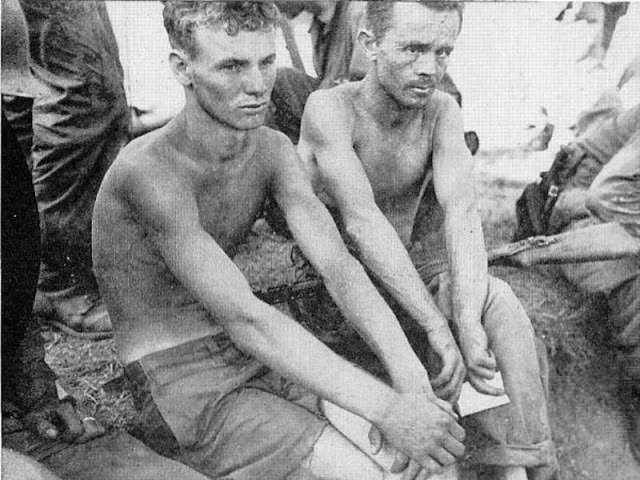
Bare-chested and hollow-eyed, two young soldiers sit close together on rough ground, their arms drawn in and their hands clasped as if to steady themselves. Dirt streaks their skin and their trousers hang loose, suggesting days of exhaustion, exposure, and hunger. Around them, blurred figures and a jumble of gear hint at the immediate aftermath of combat rather than the calm of a rear area.
The title situates the moment in 1950, when Hill 303 became synonymous with desperate fighting and the fragile line between capture and rescue during the Korean War. Their posture tells its own story: not triumphant, not posing, simply enduring—faces set with a distant, guarded focus that reads like shock as much as relief. Even without dramatic action in the frame, the photograph carries the weight of what happened just beyond its edges.
For a WordPress post exploring wartime survival and the human cost of “civil wars” and larger conflicts alike, this image offers a stark, unforgettable focal point. It’s a reminder that battles are measured not only in maps and objectives, but in the bodies and expressions of the people who lived through them. Readers searching for Hill 303 survivors, Korean War rescue accounts, or frontline soldier photography will find here a quiet, powerful record of survival at the moment it becomes visible.