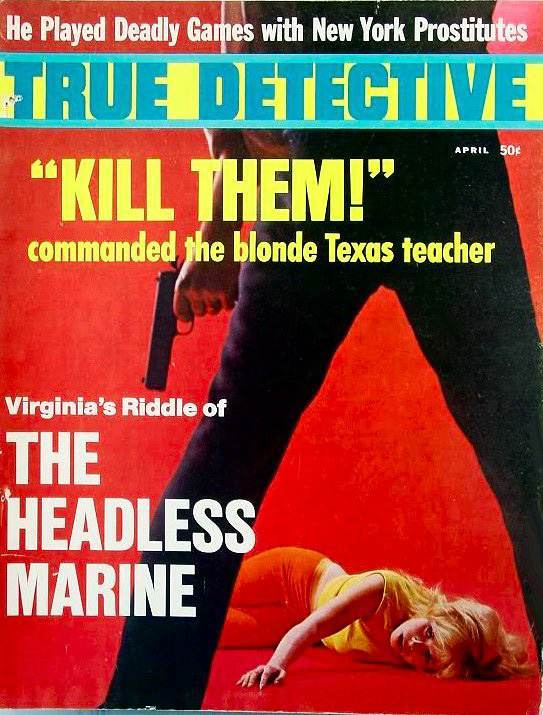
Bold pulp typography and a shock-red backdrop collide on this True Detective cover, where the composition is driven by a commanding “A-frame” stance in the foreground. The cropped figure’s legs form a hard triangular gateway, pulling the eye down to the prone blonde figure and amplifying the sense of danger without needing to show a face. Sensational cover lines—“Kill Them!” and “The Headless Marine”—stack urgency on top of the pose, turning body geometry into narrative.
What makes the A-frame so enduring is how efficiently it signals power: feet planted wide, weight forward, space controlled. In magazine illustration and crime-cover art, that silhouette creates instant hierarchy—dominant figure above, vulnerable figure below—while also framing the scene like a stage proscenium. Here, the angle of the legs and the low viewpoint do the heavy lifting, making the viewer feel small, close, and implicated, a visual trick that still shows up in modern fashion editorials and poster design.
For anyone tracing the influence of classic graphic storytelling, this image offers a clear case study in how pose becomes brand language. Designers and filmmakers continue to borrow the same stance for movie posters, album art, and fashion campaigns because it reads at a glance, even when details are abstracted or cropped. The result is a template of tension—part silhouette, part frame, part threat—proving that an iconic pose can outlive its original era and keep shaping contemporary visual culture.