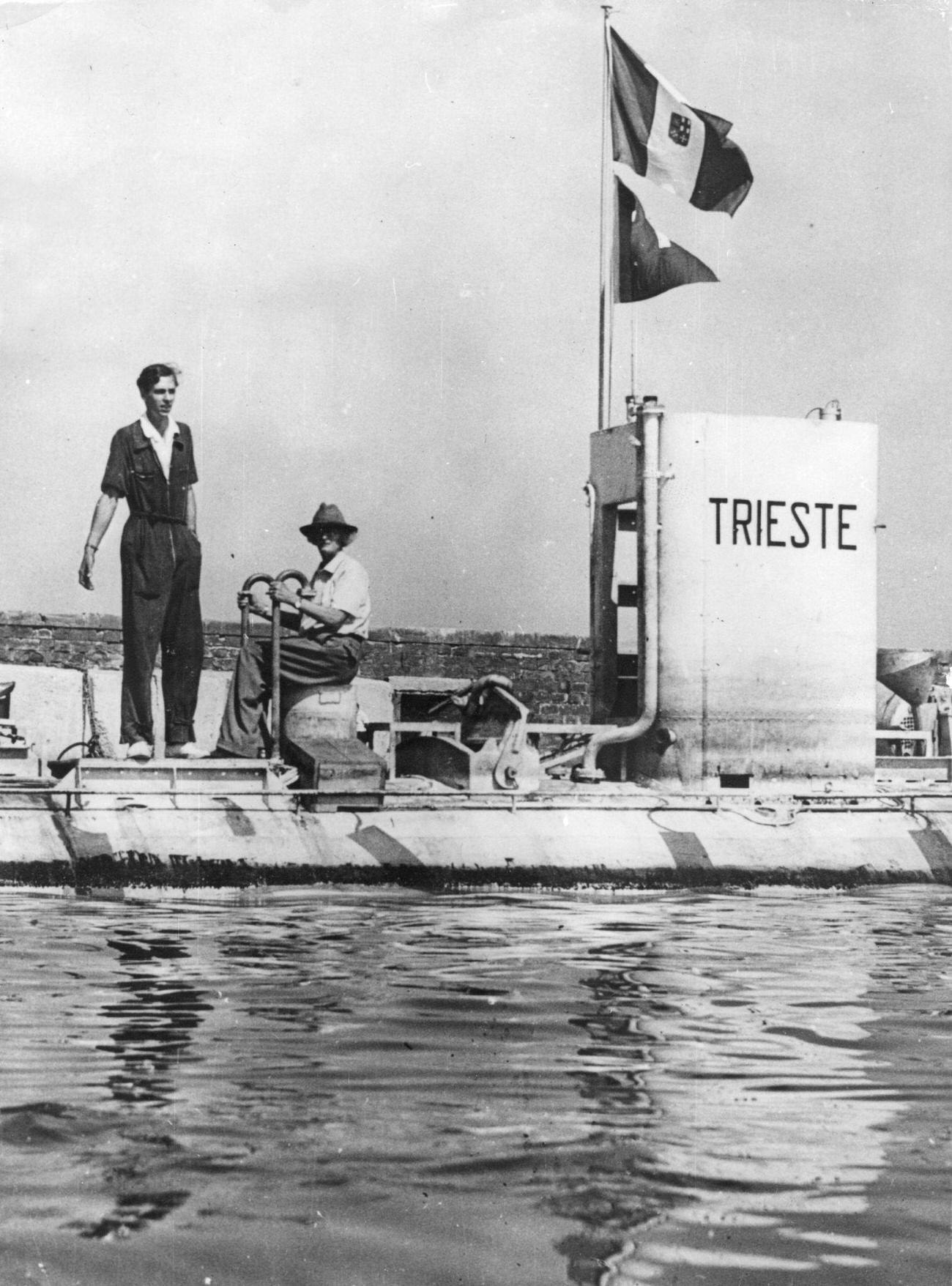
Along the calm waterline of a working harbor, the bathysphere Trieste sits low and steady, its cylindrical float emblazoned with the bold name “TRIESTE” and topped by a fluttering flag. Two figures share the cramped deck—one standing tall, the other seated at the controls—framed by pipes, metal fittings, and the utilitarian geometry of a craft built for pressure and depth rather than comfort. The scene has the quiet, matter-of-fact atmosphere that often follows a difficult test: not celebration, but a pause to breathe and take stock.
Auguste Piccard and his son Jacques appear here after a descent in 1953, a father-and-son partnership poised between experimental engineering and ocean exploration. Trieste’s design hints at mid-century invention culture, when bold ideas were translated into steel, valves, and buoyant tanks, then proven in real water under real risk. In the restrained expressions and practical clothing, you can read the tone of the era—serious work, incremental learning, and a willingness to push boundaries below the surface.
For readers interested in the history of deep-sea technology, this photograph offers a rare, grounded look at the people behind the machine. It connects the romance of undersea discovery to the hands-on reality of maritime engineering, making it a strong addition to any collection on inventions, scientific pioneers, and the development of bathyscaphes. As an archival snapshot of Trieste and the Piccards, it also serves as an SEO-friendly touchstone for topics like bathysphere history, oceanographic exploration, and early deep-diving craft.