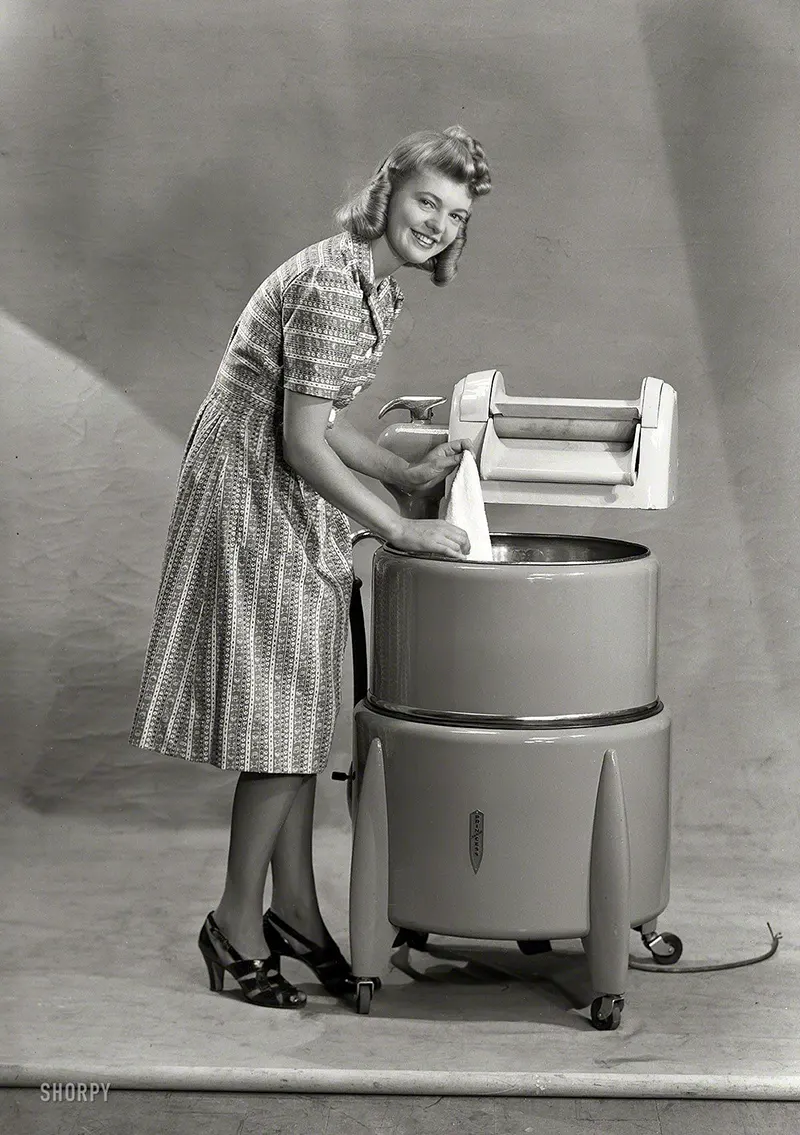
A cheerful studio scene pairs mid-century optimism with a hefty piece of home technology: a woman in a patterned dress leans over a top-loading washer, guiding fabric beneath a set of wringer rollers. The smooth, rounded cabinet sits on casters, and the cord trailing along the floor hints at the growing reach of household electricity. Even without a busy laundry room around it, the photograph speaks to an era when appliance design aimed to look clean, modern, and confidently “automatic.”
From the 1880s onward, washing machines evolved from hand-powered contraptions into increasingly mechanized helpers, and the wringer washer became a familiar bridge between old and new. Those rollers—meant to squeeze water from cloth—saved time compared with hand-wringing, yet demanded care and attention, keeping the user physically involved in every load. This image captures that in-between moment: the promise of convenience, tempered by the practical realities of early labor-saving inventions.
A Photographic Journey Through the Early Days of Washing Machines, 1880s–1950s Inventions follows the long path from experimental mechanisms to the sleek, mass-market appliances that reshaped domestic routines. Along the way come shifting expectations about hygiene, efficiency, and modern living, reflected in everything from machine silhouettes to the staged, promotional tone of period photography. For collectors, historians, and anyone curious about vintage washing machine history, these images offer a vivid look at how innovation entered the everyday home—one load at a time.