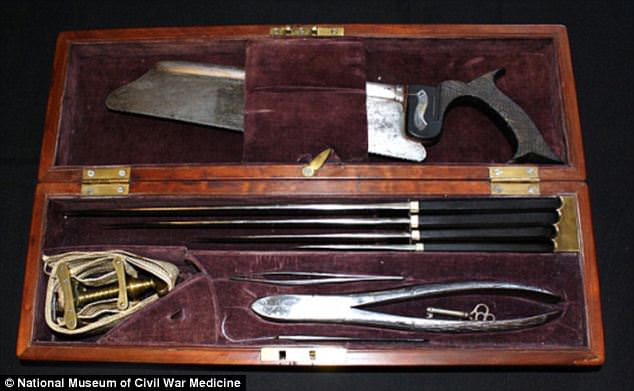
A polished wooden case lies open to reveal the blunt realities of wartime medicine: an amputation saw with a heavy handle, long knives, forceps, and slender probes arranged in fitted compartments. The deep lining and careful layout suggest a kit built for speed and order, the kind of portable toolkit a field surgeon could reach for when minutes mattered. Even without blood or battlefield noise, the steel surfaces and utilitarian design hint at how close these instruments lived to suffering and survival.
During the Civil War era, surgeons often worked in improvised hospitals where sanitation was uneven and anesthesia, while used, wasn’t always reliable or plentiful. Kits like this one were meant to travel—carried from camp to casualty station—so a practitioner could perform essential procedures under harsh conditions. Amputation, so often associated with the period, was not simply a symbol of brutality; it was frequently an emergency measure to prevent infection and save a life when shattered limbs and contaminated wounds left few alternatives.
For readers searching for Civil War medical tools, antique surgical instruments, or the history of battlefield surgery, this photo offers a stark, intimate look at what “medical care” could mean in the nineteenth century. The contrast between the refined craftsmanship of the box and the grim purpose of its contents tells its own story about a time when modern sterilization and antibiotics were still decades away. Seen today, the kit serves as a compact archive of necessity, skill, and the relentless triage of war.