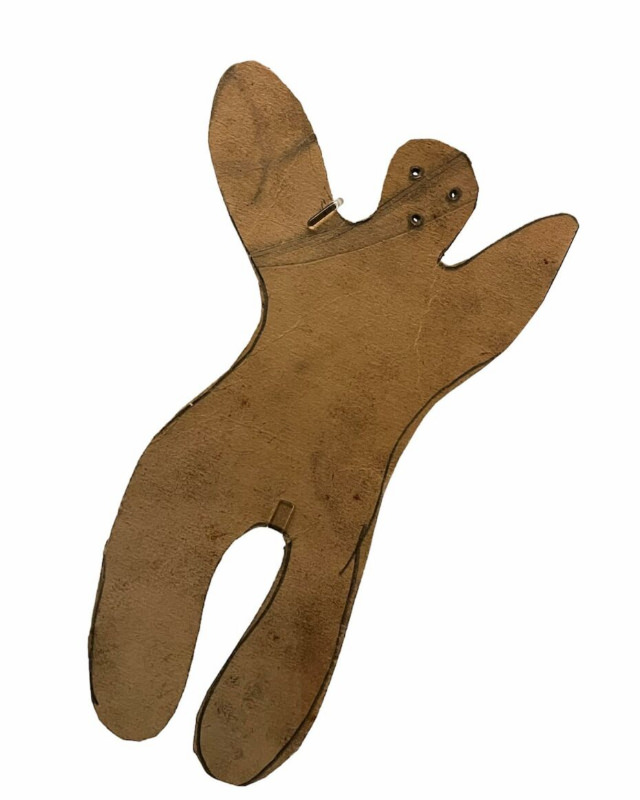
Cut into a simplified, almost totemic figure, this small paper form reads like a playful “paper mosaic” in miniature—arms lifted, body reduced to bold contours, and a few punched holes that suggest eyes and fastening points. The warm, worn surface hints at age and handling, while the edges reveal the artist’s decisive hand with scissors or blade. Even without color or complex patterning, the silhouette carries a surprising sense of movement, as if the character is caught mid-gesture.
In the context of Picasso’s rare cut-paper artworks, pieces like this spotlight an overlooked side of modern art history: experimentation with humble materials and quick, graphic invention. The cut-out’s directness feels close to collage, costume studies, or studio maquettes—objects made to test ideas before they hardened into paint or sculpture. What looks simple at first glance becomes a record of process, where the paper’s creases, punctures, and imperfections function like brushstrokes.
For readers searching “Picasso cut paper,” “paper mosaics,” or “rare Picasso artworks,” this post invites a slower look at how modernism could thrive on scraps and silhouettes. The figure’s abstracted anatomy and hand-made construction underscore the era’s fascination with reduction, rhythm, and the expressive power of outline. Seen today, it stands as a reminder that innovation often arrives in the quietest forms—lightweight, ephemeral, and intensely human.