Category: Civil Wars
Explore the human side of civil wars through authentic historical photographs. Witness the struggles, courage, and consequences of divided nations.
These images document key events and personal moments that shaped political and social transformations around the world.
-

#1 Parade of the Grand Army of the Republic during the 1914 meeting in Detroit, Michigan. 1914.
Detroit’s streets swell with spectators for the 1914 meeting of the Grand Army of the Republic, as the parade routes past tightly packed grandstands and storefronts dressed in bunting. From an elevated vantage point, the scene reads like a citywide stage: hats and shoulders form a dense sea of onlookers while uniformed marchers and mounted…
-
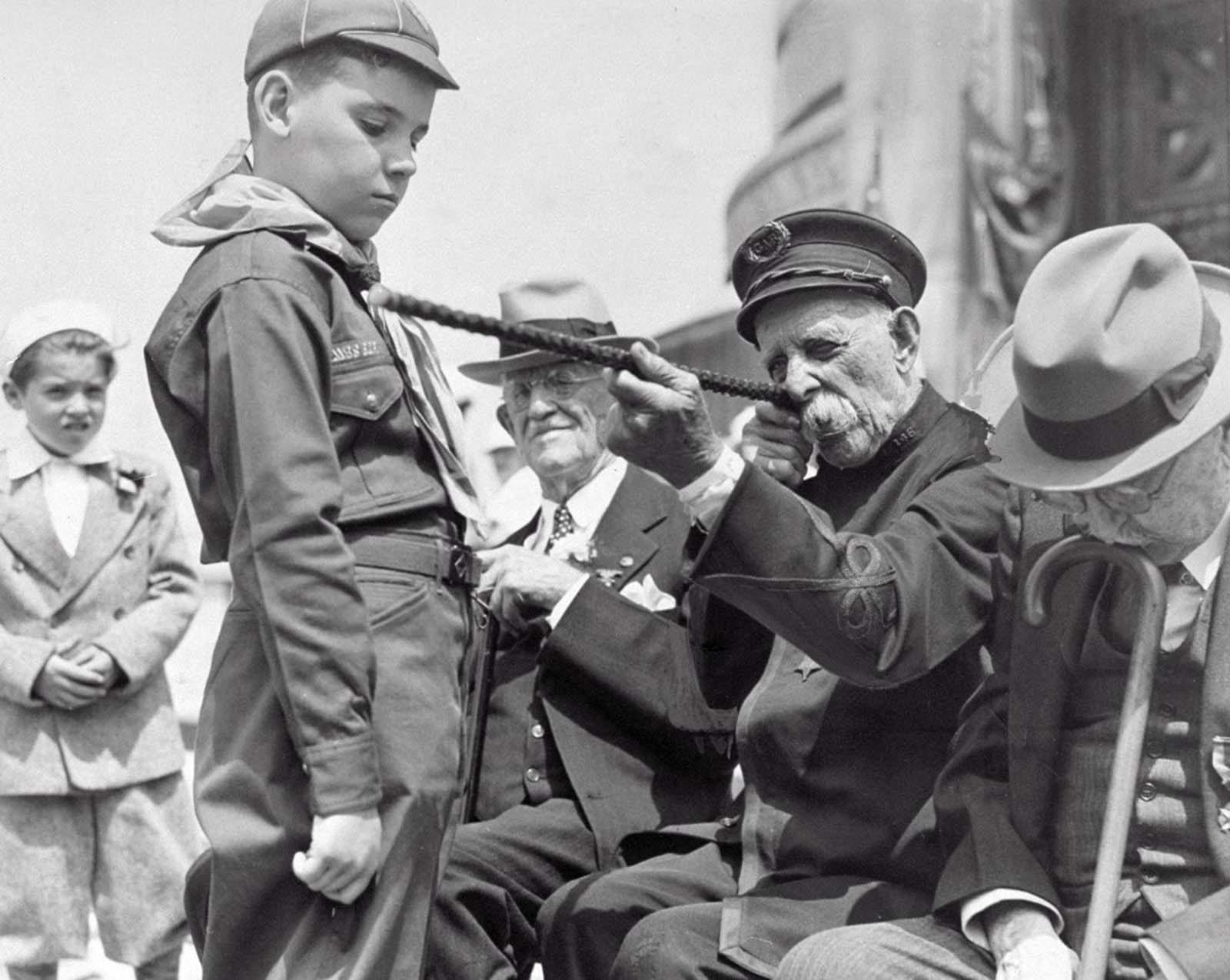
#17 At the Memorial Day parade, Civil War veteran, George W. Collier, 97, shows Alwin Sharr, 9, a boy scout cub, how he aimed his rifle during the war. 1939.
A Boy Scout cub stands at attention in his uniform while 97-year-old Civil War veteran George W. Collier leans forward, squinting down an improvised “barrel” and demonstrating the posture of aiming a rifle. The moment, set during a Memorial Day parade in 1939, feels half lesson and half living memory, with the veteran’s cap, weathered…
-
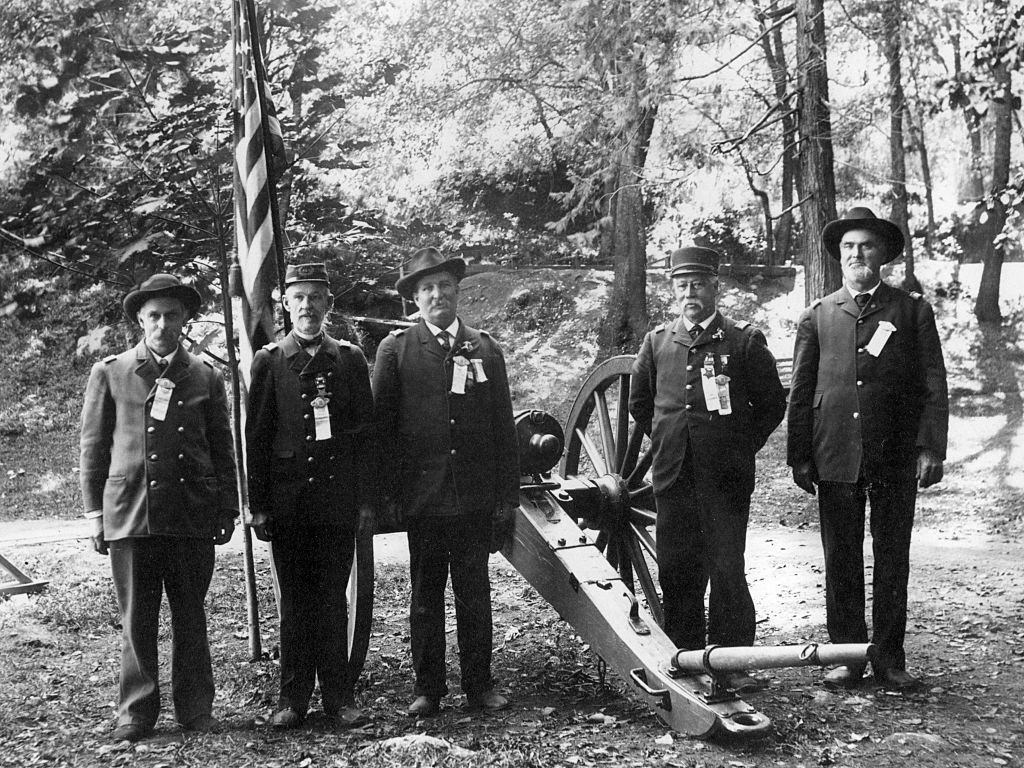
#33 The London branch of the US Civil War Veterans parade through the city on America Day, 1971.
A small line of uniformed veterans stands at ease beneath leafy trees, their coats buttoned high and their hats set with the quiet confidence of men used to ceremony. An American flag rises beside them, while medals and ribbons pinned to their chests catch the light and signal hard-won service remembered long after the guns…
-
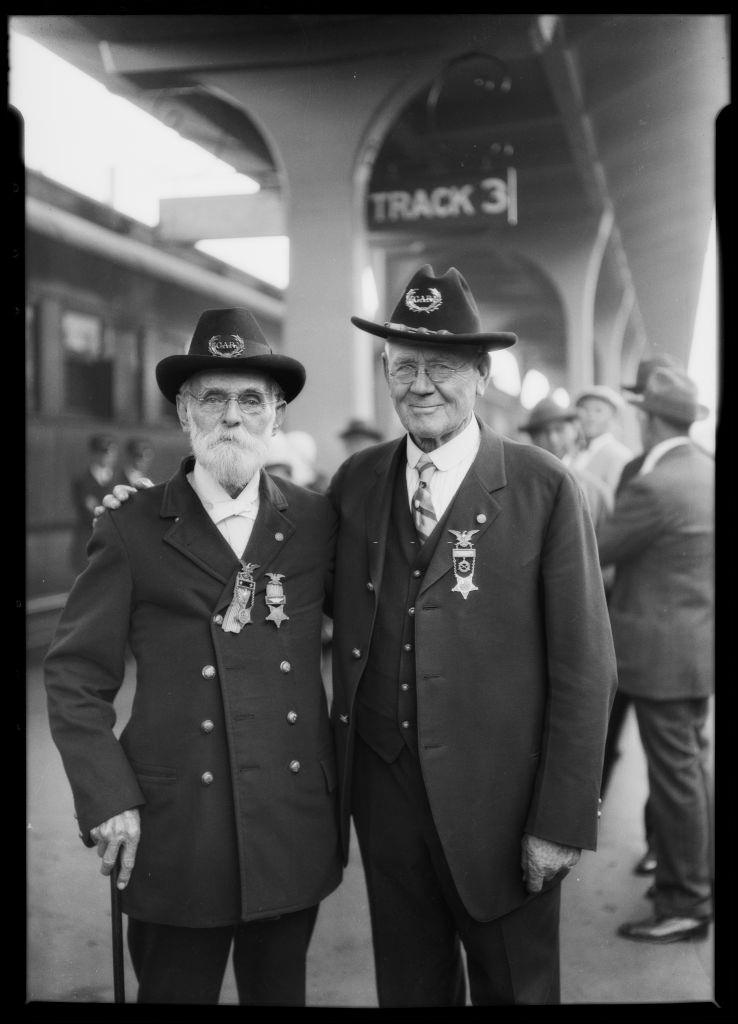
#49 Two members of the Grand Army of the Republic fraternal organization of veterans of the US Civil War at Southern Pacific station, 1926
Under the high canopy of a Southern Pacific station platform, two elderly members of the Grand Army of the Republic stand close together, posed with the calm assurance of men long accustomed to being remembered. Their dark coats and brimmed hats carry the unmistakable GAR insignia, while medals pinned to their chests catch the light—small,…
-
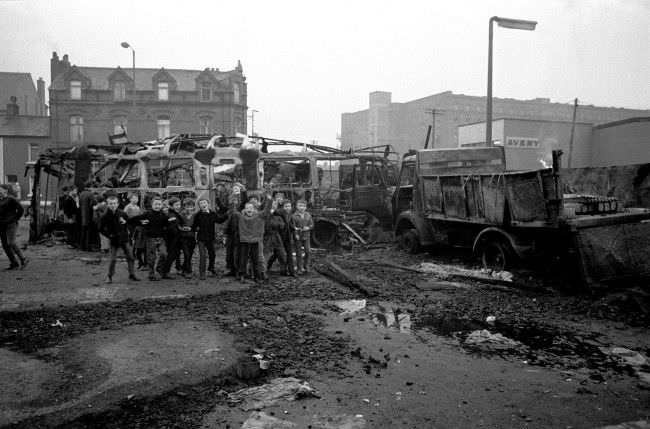
#11 Schoolboys cheer adn chant from a pile of burnt-out busses and lorries in the aftermath of the riots. 9 Feb, 1971
Morning light falls on a wrecked streetscape where the hulks of buses and lorries sit stripped to their frames, their windows gone and their bodies buckled by fire. In the foreground, a muddy road glistens with puddles and ash, reflecting the hard geometry of streetlamps and the dark outline of soot-stained metal. Behind the destruction,…
-
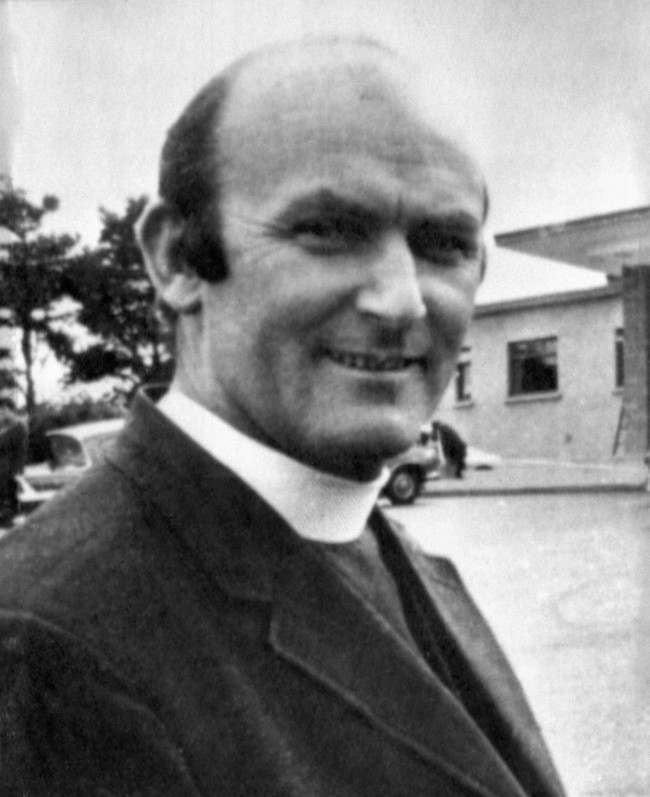
#27 Father Hugh Mullan, 40, of St John’s Presbytery, Falls Road, the priest who was shot and killed when administering the last rites to a casualty in riots near the Ballymurphy estate earlier today, 10 Aug, 1971
A close, candid portrait of Father Hugh Mullan—identified in the title as 40 and attached to St John’s Presbytery on the Falls Road—carries a quiet ordinariness that feels almost unbearable in light of what followed. He is shown outdoors in clerical collar and dark coat, caught in a moment that reads as informal rather than…
-
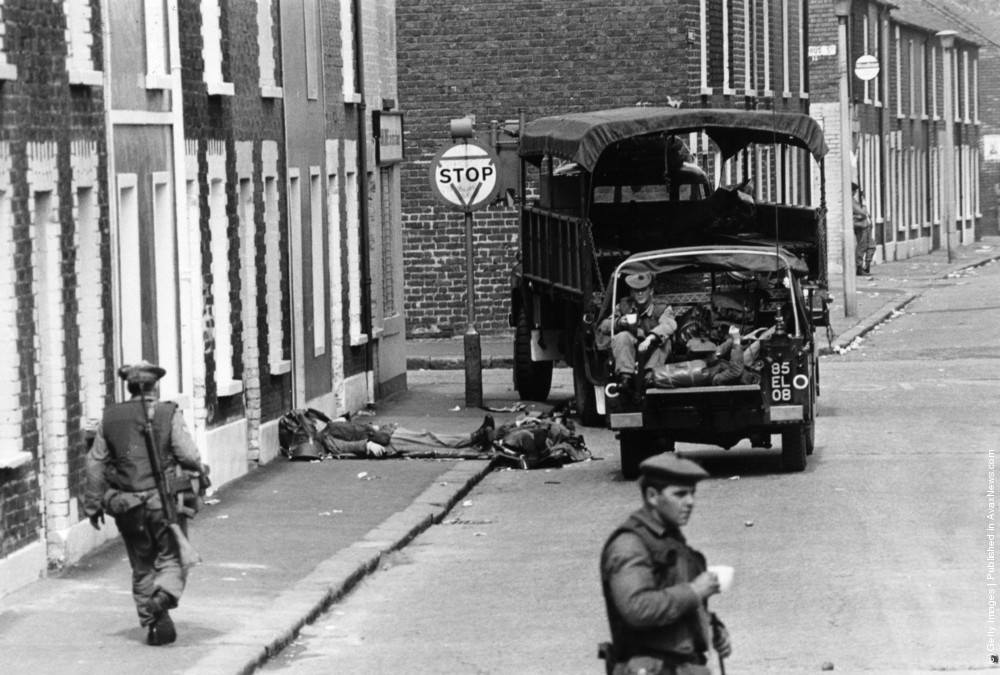
#43 British soldiers impose a curfew on the Falls Road in Belfast, July 1970.
Along a tight row of brick terraces on the Falls Road in Belfast, armed British soldiers move through a street emptied of ordinary life, their presence turning a familiar neighbourhood into a controlled zone. A “STOP” sign hangs at the corner like an ironic echo of the authority now being enforced, while military vehicles sit…
-
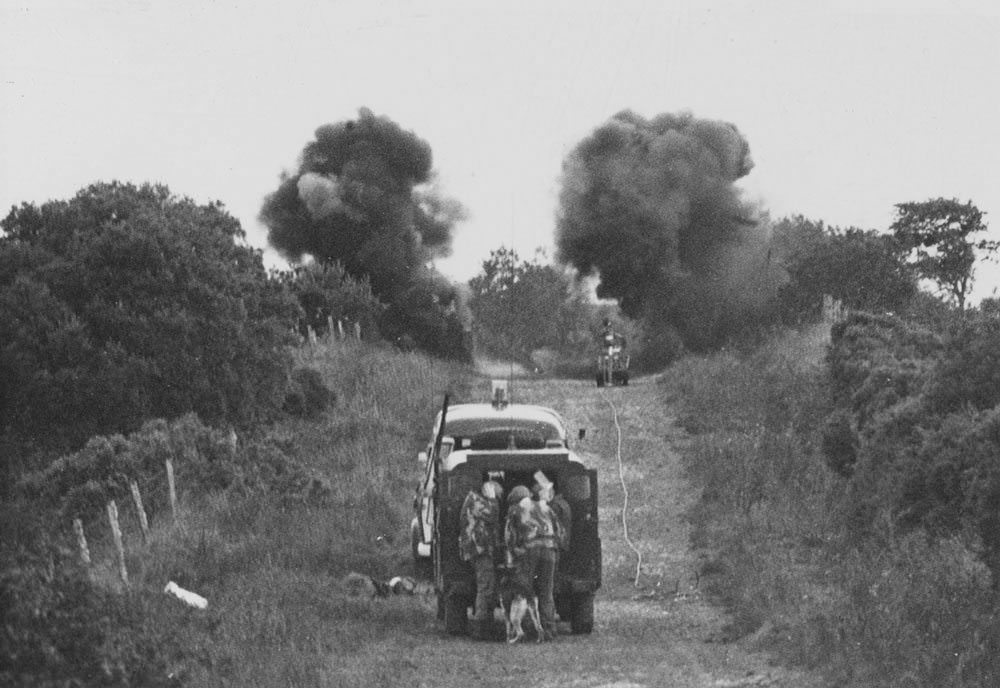
#59 Members of 321 Explosive Ordnance Disposal Company, Royal Army Ordnance Corps, detonate a device near the Irish border, 1975.
Smoke columns billow upward beyond a narrow country lane as a controlled blast erupts in the mid-distance, turning an otherwise quiet border landscape into a scene of sudden force. In the foreground, a small group of soldiers gathers at the rear of a vehicle, their attention fixed on the detonation, while a dog stands close…
-
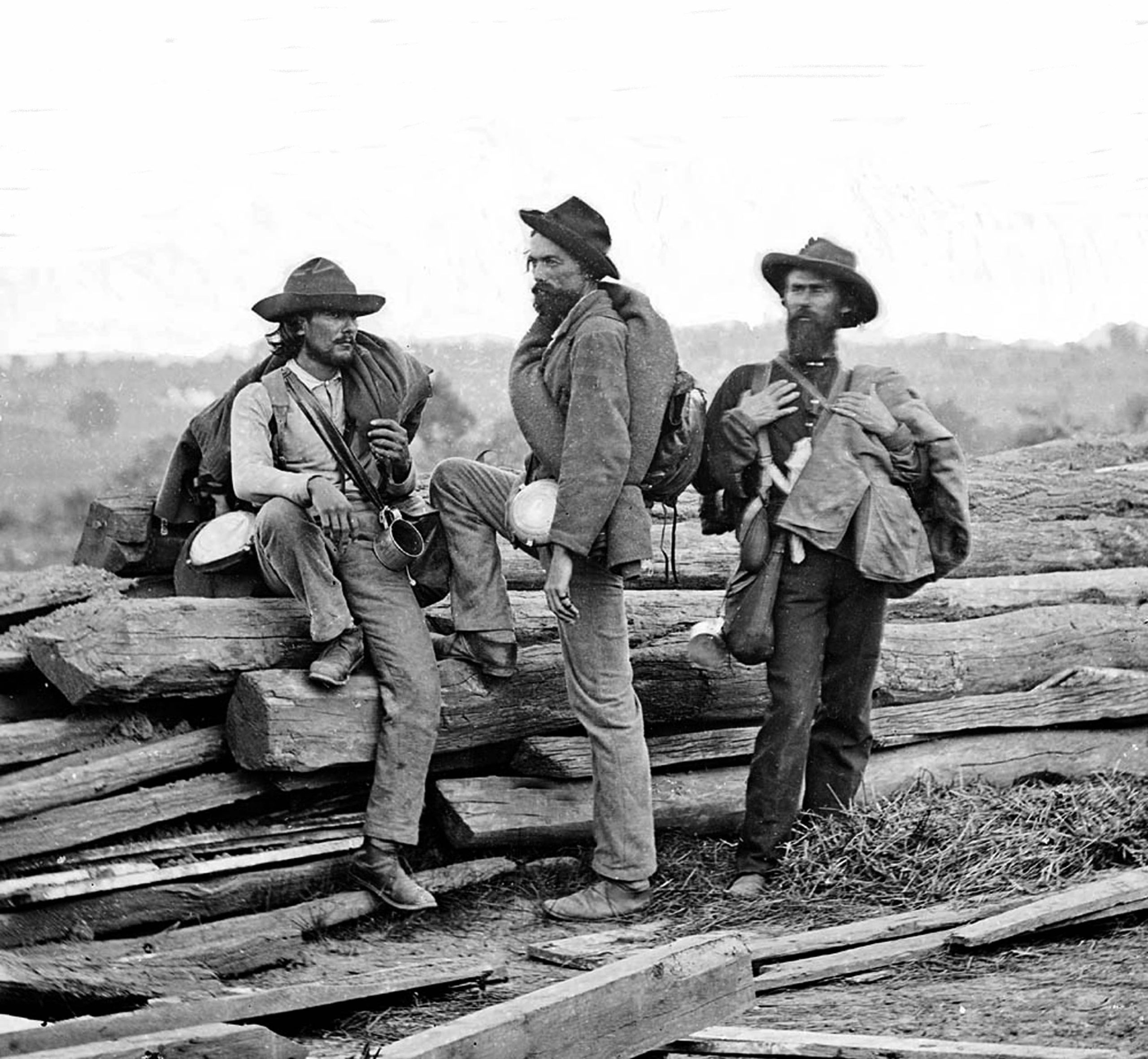
#8 Three Confederate Army prisoners relax after the Battle of Gettysburg, 1863
This Civil War photograph shows three Confederate Army prisoners pausing to rest after the Battle of Gettysburg in 1863. Gathered around a rough stack of timber, the men appear calm and composed, their hats low and their expressions weary as they face the camera.
-
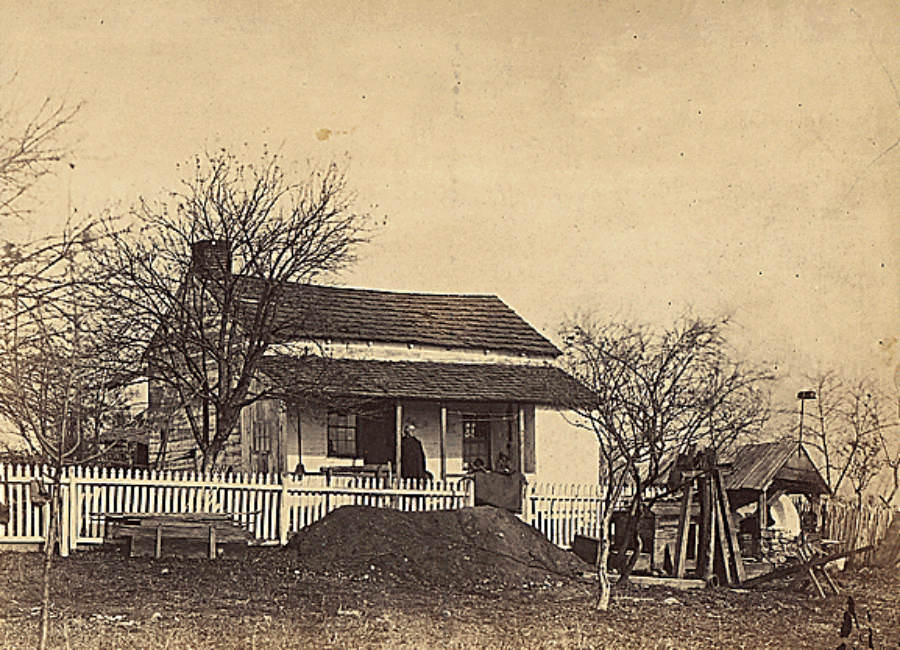
#24 The headquarters of the Army of the Potomac during the Battle of Gettysburg.
This historical photograph, titled “The headquarters of the Army of the Potomac during the Battle of Gettysburg,” offers a quiet yet powerful view into the Union command presence during one of the most pivotal moments of the American Civil War. The simple farmhouse setting contrasts with the immense decisions and movements that would have surrounded…