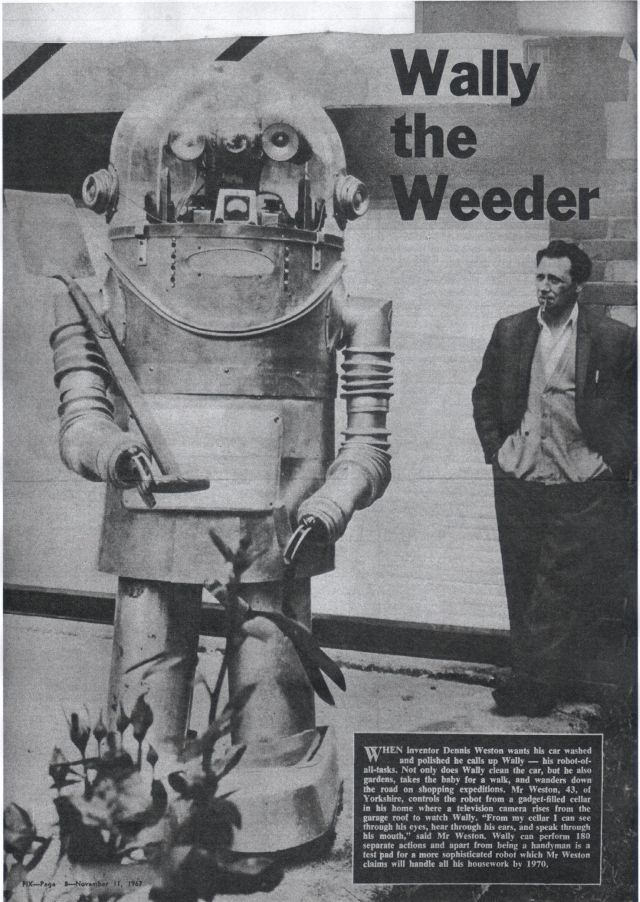
A chunky, space-helmeted machine dominates the scene under the bold headline “Wally the Weeder,” looking less like science fiction and more like a practical experiment rolled out onto a driveway. Its rounded visor, riveted panels, and jointed arms suggest a homemade kind of futurism—part workshop ingenuity, part public spectacle—built for a world that imagined robots would soon step in as everyday helpers.
In the mid-1960s, the dream wasn’t only about rockets and moonshots; it was about the modern home and the promise of labor-saving inventions. The photo’s staging—robot at work with a man observing nearby—speaks to that era’s fascination with automation, where a “real-life housekeeper” robot could be presented as the next logical household appliance. Even the playful alliteration of the captioned name hints at how these machines were marketed: friendly, useful, and just believable enough to feel imminent.
Details in the frame reward a closer look, from the mechanical “hands” to the utilitarian body that prioritizes function over sleek design, capturing the do-it-yourself spirit of early robotics. While the post title frames this as 1966’s vision of the future and links it to the story of “Tinker the Robot,” the image itself anchors the larger theme: the inventive optimism of the 1960s, when newspapers and hobbyists alike flirted with the idea that robots would soon wash, weed, and tidy their way into ordinary life.