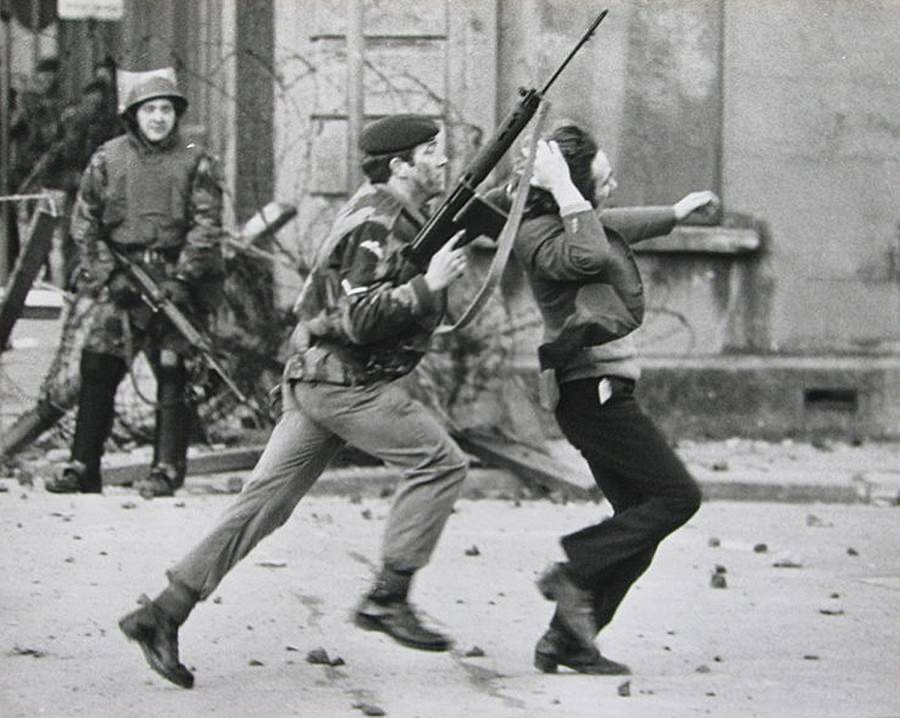
Mid-stride in a debris-strewn street, a British soldier lunges forward as a civilian demonstrator recoils with hands raised, the tension of the moment frozen in sharp profile. Another armed figure stands back near a wall, watching the arrest unfold, while broken stones and scattered rubble underline the unrest that has spilled into public space. The scene’s blunt choreography—rifles, uniforms, and a hurried, defensive posture—communicates authority and fear in the same breath.
The title places the photograph in Derry on Bloody Sunday 1972, one of the most searing episodes of the Northern Ireland conflict, often grouped under the broader history of civil wars and civil strife. Rather than offering distance, the camera seems almost embedded in the action, capturing the compressed seconds where crowd control becomes physical confrontation. Even without explicit signage or landmarks, the visual language of urban conflict is unmistakable: militarized presence, civilians caught in motion, and streets that look more like a battleground than a neighborhood.
For readers searching the history of Bloody Sunday, Derry, and the British Army’s role during the Troubles, this image operates as a stark entry point into the lived experience behind headlines and official statements. It suggests how quickly demonstrations could turn into arrests and how rapidly a city could be transformed by violence, patrols, and mistrust. As a historical photo, it invites careful viewing—not to sensationalize suffering, but to remember how political crisis is etched into ordinary bodies, ordinary streets, and a single captured instant.