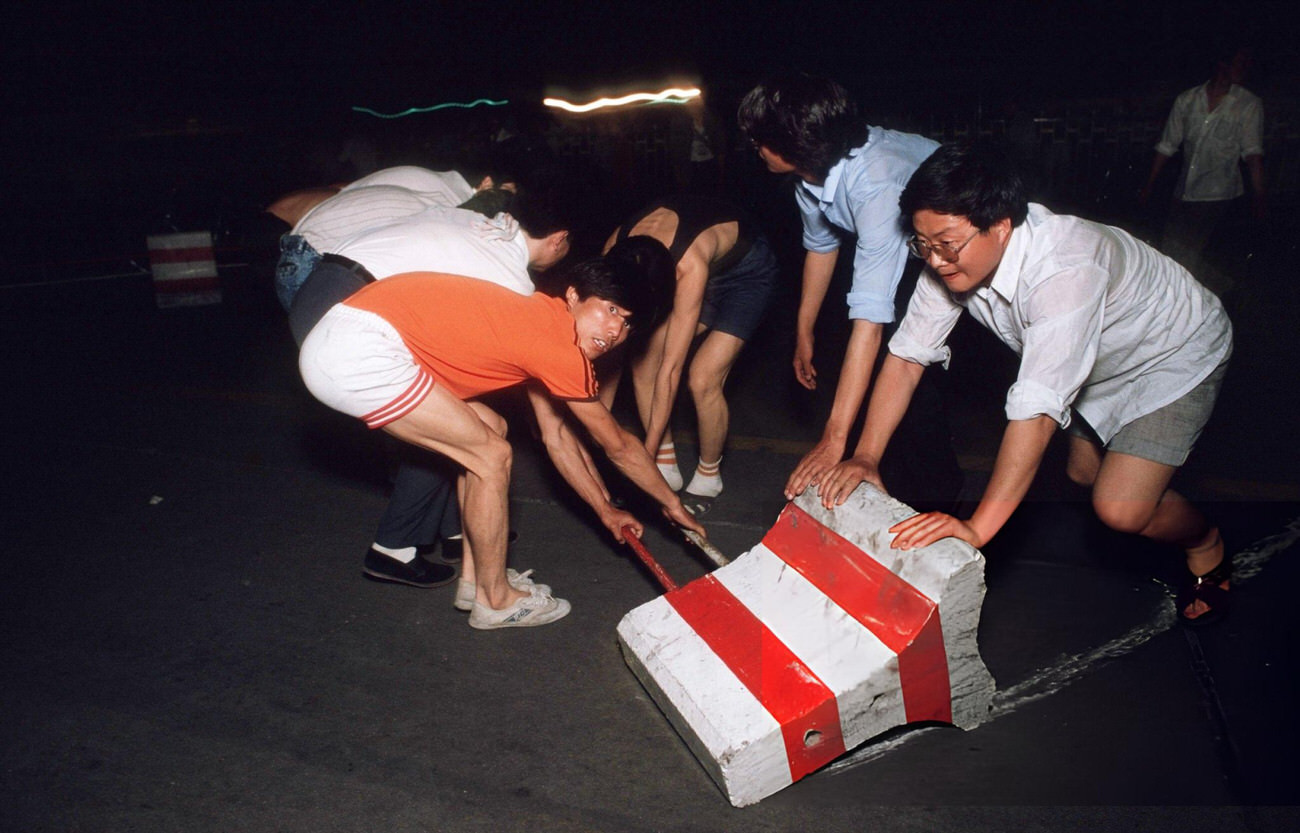
Under the glare of streetlights and blurred trails of passing vehicles, a group of pro-democracy demonstrators strains together to drag a heavy road barrier into place on Changan Avenue in 1989. The scene is intimate and urgent: rolled sleeves, bent backs, and tense faces caught mid-effort, with the red-and-white stripes of the barricade flashing against the dark roadway. It’s a rare, ground-level glimpse of how protest can become physical labor, turning ordinary traffic control blocks into tools of defiance.
What stands out is the coordination—hands gripping concrete, bodies braced, eyes fixed on the task—suggesting both improvisation and determination in a rapidly changing street battle for space. The camera’s closeness brings the viewer into the moment, where strategy is measured in inches and seconds, and where a simple object can become a frontline. In the context of the 1989 democracy movement, such acts speak to the wider effort to slow authority’s advance and to claim visibility in the capital’s most symbolic thoroughfare.
For readers exploring the history of civil unrest and political movements in modern China, this photograph offers a stark reminder that large events are built from countless small, risky decisions made by individuals. It also captures the atmosphere of uncertainty that hangs over contested streets—nighttime, noise, and the feeling that anything might happen next. As a historical photo of the 1989 protests on Changan Avenue, it invites reflection on courage, collective action, and the fragile line between public order and public dissent.